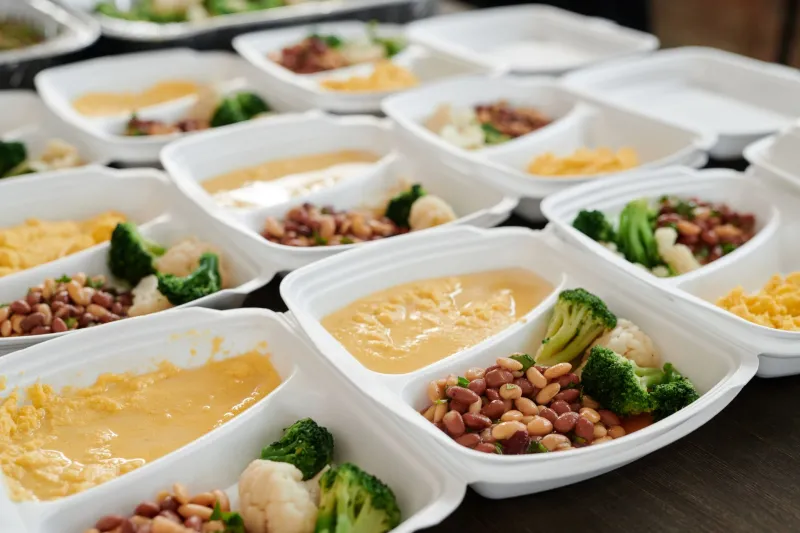
Sunday Meal Prep Is Burning You Out — Try This Instead

Photo by Photo by Cabri Caldwell on Unsplash on Unsplash
Somewhere along the way, spending four hours on a Sunday turning your kitchen into a commercial operation became a wellness status symbol. Rows of identical mason jars. Color-coded containers. A week's worth of lunches lined up like soldiers.
And if that works for you — genuinely, sustainably, joyfully — keep doing it.
But for a lot of people, the Sunday prep ritual has quietly shifted from a helpful habit into a low-grade obligation that drains the last reserves of weekend energy. And when Monday arrives and you're already a little resentful of the container of overnight oats staring at you from the fridge, something has gone sideways.
The Problem With Treating Your Body Like a Predictable Machine
Here's the core issue with rigid weekly meal prep that nobody really talks about: your body's needs aren't static across seven days.
Your appetite, your energy output, your stress levels, your sleep quality — all of these shift throughout the week and directly affect what your body actually wants and needs from food. A high-intensity Tuesday might leave you genuinely needing more carbohydrates than your prepped lunch accounts for. A stressful Thursday might mean your appetite is lower than usual. A social lunch on Wednesday blows up your plan entirely.
When you've invested hours prepping a fixed menu, there's real psychological pressure to stick to it — even when it doesn't match what your body is asking for. That pressure is the opposite of what good nutrition is supposed to feel like.
Decision Fatigue Cuts Both Ways
The traditional argument for meal prep is that it eliminates daily decision fatigue around food. And that's a real benefit. But heavy upfront prep creates its own version of the problem.
First, there's the planning fatigue before you even start — figuring out what to make, checking what's in the fridge, building a shopping list, going to the store. Then there's the execution fatigue of actually cooking for three to four hours straight. And finally, there's the monotony fatigue that sets in by Wednesday when you're eating the same grain bowl for the fourth time.
For many busy professionals, this cycle ends in one of two ways: either the prep gets abandoned mid-week and the containers get thrown out, or it gets maintained but starts feeling like a chore rather than an act of self-care. Neither outcome is great.
What Actually Works: Distributed Prep
Instead of one big weekly production, try spreading small amounts of food prep across the week in lower-effort windows. The goal isn't to have everything ready — it's to reduce the friction of making good choices in the moments when you're tired and hungry.
The 20-minute Sunday reset. Instead of a full prep session, spend 20 minutes doing just the basics: wash and chop raw vegetables, cook a batch of one grain (rice, farro, quinoa — whatever), and hard-boil a few eggs. That's it. No full meals, just building blocks.
Tuesday evening top-up. By midweek, you've used up whatever you prepped on Sunday and you have a better sense of what the rest of the week looks like. Spend 15-20 minutes roasting whatever vegetables are in your fridge, or marinating a protein for the next two nights. This is faster than a full prep session and more responsive to how the week is actually going.
The batch protein principle. If you cook any protein — chicken, ground turkey, hard-boiled eggs, canned beans — make more than you need for that meal. Double batching proteins takes almost no extra time and gives you flexible options for the next day without requiring a separate prep session.
Freezer-forward thinking. A few times a month rather than every week, make something that freezes well — soups, grain-based dishes, turkey meatballs. Pulling something from the freezer on a Thursday night is infinitely better than ordering out, and it takes the pressure off the weekly prep cycle entirely.
Rethinking What 'Prepared' Actually Means
Part of the Sunday prep culture is a subtle implication that if you don't have everything planned and portioned, you're not really taking your health seriously. That framing is worth pushing back on.
Keeping your kitchen stocked with versatile, quick-cooking ingredients is its own form of preparation — and arguably a more resilient one. If your pantry has canned chickpeas, a few grains, good olive oil, canned tomatoes, and a rotating cast of whatever produce is fresh, you can put together a genuinely nutritious meal in 15-20 minutes on a weeknight without a single container of pre-portioned food.
The same goes for your freezer. Frozen edamame, frozen vegetables, frozen shrimp that thaws in minutes — these aren't cheating. They're smart infrastructure.
For the Prep Devotees: A Few Tweaks Worth Considering
If you love your Sunday prep and it's genuinely working for you, there are still a few adjustments that can make the system more sustainable over the long term.
Prep components, not complete meals. Rather than assembling finished dishes, prep the parts and let yourself mix and match throughout the week. A roasted vegetable, a cooked grain, a protein, and a sauce can become multiple different meals depending on how you combine them. This keeps things flexible and reduces the monotony problem.
Leave one meal per day unplanned. Give yourself deliberate flexibility around one meal each day — usually dinner makes the most sense. Having that open slot means you can respond to what actually sounds good, what's fresh, or what social plans emerge, without feeling like you're derailing your week.
Build in a 'use what's left' meal on Fridays. A grain bowl, a frittata, a stir-fry — whatever clears out the fridge. This prevents food waste, reduces the pressure to have everything perfectly planned through the end of the week, and honestly often produces some of the most creative meals.
The Actual Goal Here
Healthy eating for busy professionals isn't about having the most organized fridge on Instagram. It's about building systems that are flexible enough to work when life doesn't go according to plan — which, if you're a busy professional, is most weeks.
The best prep strategy is the one you'll actually maintain in February, not just in January. And if Sunday afternoons currently feel more like a stressful obligation than a reset, that's a pretty good signal that the system needs to change — not you.